
When parents feel blamed in ADHD pathways
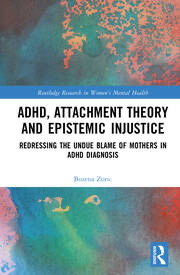
A new book by Dr Bozena Zoric: ADHD, Attachment Theory and Epistemic Injustice (Routledge, 2026).
Many parents start to wonder about ADHD because they notice the same difficulties coming up again and again, at home, at school, or both. This might include problems with attention and concentration, restlessness, impulsivity, strong emotional reactions, or more challenging behaviour.
When parents raise these concerns, experiences vary. Some feel supported and understood. Others feel their view is not taken as seriously as it should be, or that the conversation shifts towards parenting "fault", rather than a balanced look at a child's needs.
This matters, because parents are often best placed to describe what day-to-day life looks like. Their observations are not "just feelings". They are valuable information that helps professionals understand what a child is experiencing.
A useful idea: epistemic injustice
In the book, Dr Zoric uses the term epistemic injustice to describe situations where someone's account is given less weight than it deserves. The term was developed in philosophy by Miranda Fricker, and later explored in healthcare by Havi Carel.
In plain terms: it is when a parent is trying to share meaningful information, but their voice is discounted because of assumptions or stereotypes.
Where attachment theory can complicate ADHD discussions
Attachment theory can be helpful in some contexts. In ADHD-related discussions, though, it can sometimes be applied in ways that place undue responsibility on mothers, particularly when a child's ADHD traits sit alongside oppositional behaviour.
A key theme of the book is how "mother blame" can become the unspoken backdrop, sometimes subtly, sometimes more directly, and how that can affect whether children receive timely assessment, diagnosis and support.
What the book explores
- clinical case review
- interviews with mothers of children with ADHD, and wider family members
- interviews with professionals working with, or advocating for, children with ADHD
- reflection informed by clinical practice, medical humanities and critical approaches
The aim is practical: to support fairer, more sensitive ADHD practice, with proper recognition of neurodiversity and the social context families live within.
Where to buy the book
ADHD, Attachment Theory and Epistemic Injustice: Redressing the Undue Blame of Mothers in ADHD Diagnosis is available now from Routledge in hardback and as an ebook, with a paperback edition due in 2027.
If you are looking for ADHD support
You may find these pages helpful: What is ADHD?, what to expect at an assessment, our ADHD questionnaire and questions and answers. When you are ready, our private ADHD assessment for children starts with a conversation with Camille.
Keep reading
What causes ADHD
What causes ADHD in children? A paediatrician on genes, brain development and prematurity, the myths about sugar and screens, and why parenting is not to blame.
Read moreParenting a child with ADHD
How to help a child with ADHD at home: routines, clear instructions, praise, sleep, screens, homework and siblings, plus parent training and support in Surrey.
Read moreDr Bozena Zoric
Dr Bozena Zoric is a Consultant Neurodevelopmental Paediatrician who led one of the largest NHS ADHD clinics for 20 years. Private ADHD assessments in Surrey.
Read moreTalk to us about an assessment
Camille, our clinic manager, will explain how it works, answer your questions and find you a date. No GP referral needed.